Navigating Tree Removal Access Issues in DeLand, Florida
@thetreeremovalaccessissuesway
November 4, 2026 · 8 min read
Living in DeLand, Florida, means you get used to the sight of towering oaks and stately pines. They give this town its character, shading our streets and yards with a canopy that feels almost permanent. But trees are not permanent. Storms roll in from the coast, diseases take hold, and sometimes a tree simply outgrows its space. When that happens, the real work begins, and it is rarely as simple as just cutting it down.
Every property has its own personality. A tight driveway, a fence line that leaves only a few feet of clearance, or power lines threading through the branches can turn a straightforward job into a logistical puzzle. These are the moments when a homeowner realizes that tree removal access issues are not just about the tree itself. They are about the space around it, the equipment needed to reach it, and the regulations that govern what you can do with it.
Understanding What Limits Access
The first thing I notice when I look at a property is how the tree relates to everything else. Is it close to the house? Does it overhang the driveway? Are there utility lines running through the canopy? These conditions define what kind of equipment can be used and how much labor will be required. A tree sitting in the middle of an open yard is one thing. A tree wedged between a fence line and a neighbor’s tool shed is another thing entirely.
One of the most common obstacles I see in DeLand is lot access. Many older neighborhoods have narrow streets and small front yards. A crane truck, which is often the fastest and safest way to remove a large tree, needs room to set its outriggers and swing its boom. If there is no space for that, the crew has to rely on a bucket truck to reach the upper branches manually, cutting the tree in sections and lowering each piece with ropes. This takes longer and costs more, but it is the only option when the tree is boxed in by structures or hardscape.
The Role of Equipment in Tight Spaces
Equipment choices matter more than most people realize. A bucket truck gives a climber access to high branches without having to scale the trunk, which is safer when the tree is near power lines or over a roof. But a bucket truck still needs a stable place to park, and its reach is limited to about fifty or sixty feet. For taller trees, or for trees on steep slopes, a crane truck becomes necessary. That crane needs a solid, level surface and enough swing radius to lift the tree segments clear of obstructions.
Once the tree is down, the real mess begins. The trunk and limbs have to be fed through a chipper, which turns them into mulch. That chipper has to be positioned so the brush can be fed into it without blocking the driveway or creating hazards for pedestrians. Then comes the stump. A stump grinder is a heavy machine that chews through wood and roots, but it needs to be maneuvered into place. If the tree was against a fence line or tight against a foundation, grinding the stump might require digging around it by hand first.
Every piece of equipment has its own footprint. A chainsaw is small, but everything else is big. And every piece of equipment has to get to the tree. That is where tree removal access issues become a central part of the planning process. If the gate is too narrow for the chipper, or if the driveway is too soft for the crane truck, the whole approach has to change.
Power Lines, Permits, and Property Boundaries
Power lines add a layer of complexity that cannot be ignored. In DeLand, many lots have overhead lines running along the street or between houses. A tree that has grown into those lines cannot just be pulled down. The utility company has to be notified, and in some cases they need to de-energize the lines or trim the tree themselves. Working near live lines requires specialized training and equipment, and it adds time to the job. It also means the crew has to coordinate with the power company’s schedule, which can delay the removal.
City permits are another factor that catches homeowners off guard. DeLand has regulations about tree removal, especially for certain species or for trees above a certain size. A permit application usually requires a site assessment, where someone comes out to look at the tree’s condition, its location relative to property boundaries, and its impact on the neighborhood. The assessment might also consider whether the tree is protected because of its size or species. In some cases, a permit is denied, and the homeowner has to explore alternatives like heavy pruning or cabling instead of removal.
Property boundaries can also create access issues. If the tree is near the fence line, the branches may extend over a neighbor’s yard. In Florida, the law generally allows a property owner to trim branches that cross onto their land, but removing the whole tree is different. That requires the neighbor’s permission, especially if the equipment needs to go through their property. I have seen jobs stall for weeks because of a boundary dispute or a neighbor who did not want trucks driving across their lawn.
Planning Around the Unexpected
Every site assessment I have done starts with walking the property and looking for hidden problems. A buried sprinkler system, a septic tank lid, or a shallow gas line can turn a routine removal into a costly repair if the equipment damages them. The best approach is to mark all underground utilities before any heavy equipment arrives. That means calling 811 to have lines located, and then working around them.
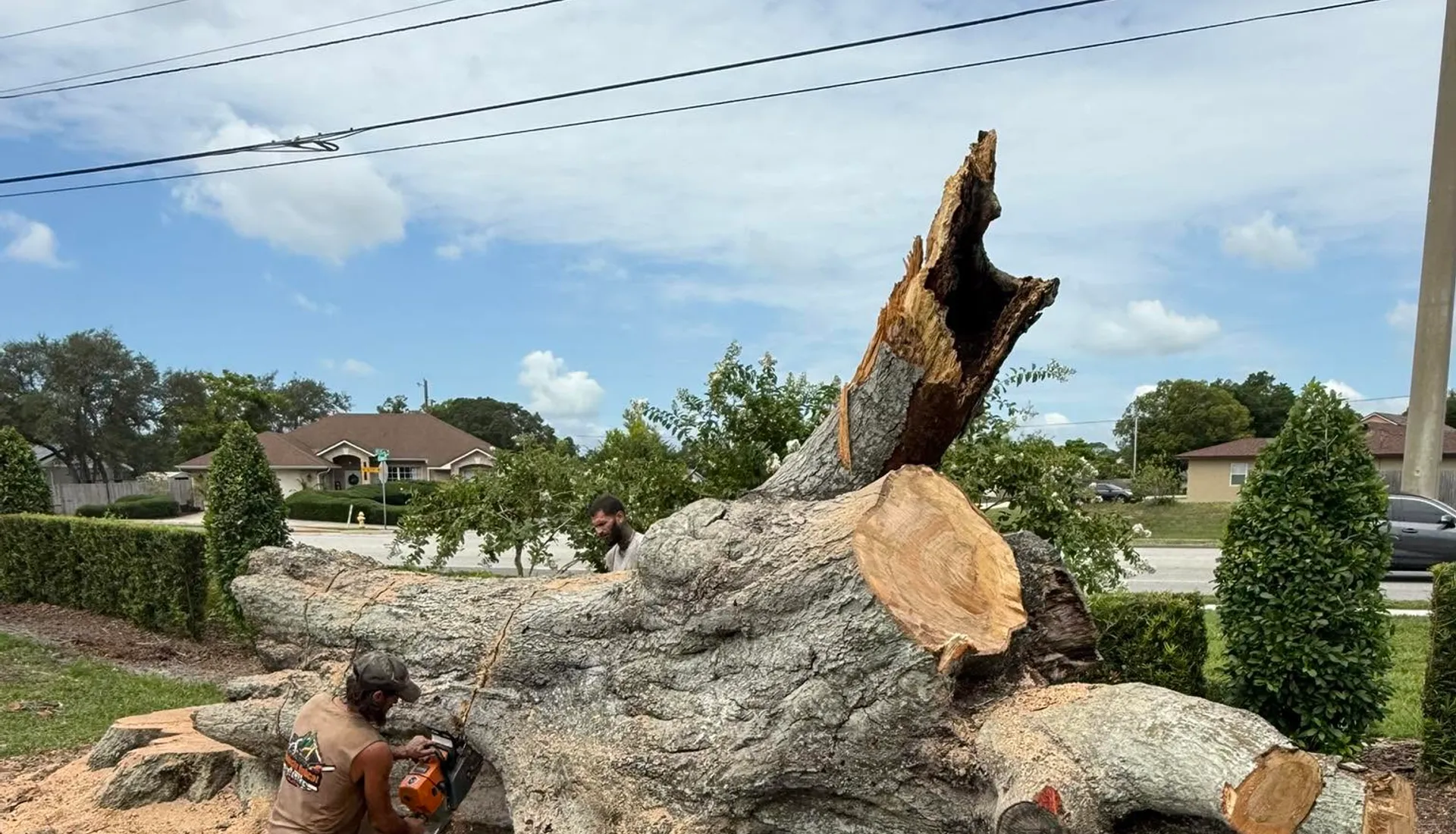
Overhead clearance is just as important as ground clearance. A tree that leans toward a house or over a driveway requires careful cutting to avoid dropping a limb onto a roof or a car. Climbers use ropes to guide each section down, but that only works if there is a clear path for the rope to travel. If the tree is tangled in vines or has multiple trunks, the rigging becomes more complicated. Experienced crews carry a variety of ropes, pulleys, and rigging gear to adapt to each situation.
Emergency Service and the Race Against Time
Sometimes there is no time for careful planning. After a hurricane or a severe thunderstorm, a tree may fall across a driveway or onto a house. Emergency service calls require a different kind of thinking. The priority is to make the property safe and accessible as quickly as possible, even if that means leaving the stump or the cleanup for later. In those situations, the crew may have to work around live power lines, standing water, or debris that blocks the normal access routes.
I remember a job in DeLand where a large oak came down during a storm and blocked the only driveway into a small subdivision. The homeowner called Dan at vbtreeremoval.com, and he had a crew there within the hour. The access was so tight that they had to use a bucket truck to reach the tree from the street while a second crew worked from the other side with chainsaws. They cut the trunk into manageable sections and pulled each piece out with a skid steer until the driveway was clear. That job took most of the day, but the homeowner could get in and out by evening.
That kind of work demands judgment. You have to decide what can be saved and what has to come down. You have to weigh the risk of further damage against the urgency of removing the tree. And you have to do it all while keeping the crew and the property safe.
Making Good Decisions About Tree Care
Tree removal access issues are not just a technical problem. They are a planning problem that affects the timeline, the cost, and the overall success of the job. Homeowners who understand these issues before they hire a crew can make better decisions. They can ask the right questions: Can a crane truck fit in my driveway? Do I need a city permit? Is there enough space for a chipper and a stump grinder? Will the removal damage my landscaping?
A good arborist or tree service will walk the property with you and point out the potential problems. They will explain why certain equipment is needed and why some approaches cost more than others. They will also tell you if the tree can be saved with pruning or cabling instead of removal. That kind of honesty builds trust and helps you avoid surprises later.
If you live in DeLand or anywhere in central Florida, the key is to think ahead. Look at your trees now, before a storm forces your hand. Check the clearance around them. Note where the power lines run. Think about how a crane truck or a bucket truck would get to the tree. If you see potential problems, address them early. A little planning can save you time, money, and a lot of stress when the tree finally has to come down.